In January 1919, a socialist locksmith named Anton Drexler founded the German Workers’ Party; the group held its first meeting in September. In attendance was a young veteran from the Great War, Adolf Hitler.
Drexler was a chronic alcoholic who died from it at age 57.
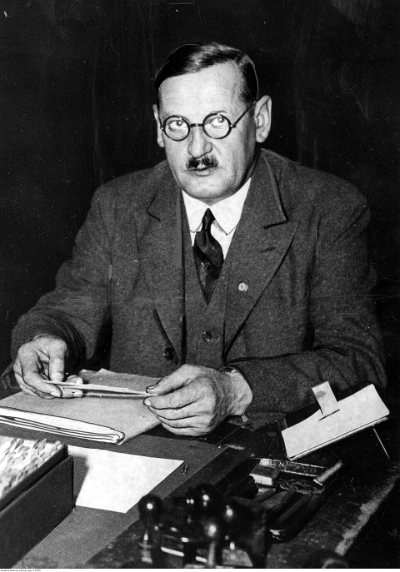
Hitler mimicked his physical appearance.
By the early 1920s, the organization was renamed the National Socialist Party, better known as the Nazis. Hitler assumed control. He organized rallies in Munich and other cities.
He was actually sentenced to prison for a time. Yet the Nazis remained somewhat positive.
Hitler was imprisoned in Landsberg Prison in 1924 after leading the failed Beer Hall Putsch coup in Munich. He was convicted of high treason, served only nine months of a five-year sentence, and used the time to dictate his manifesto, Mein Kampf (My Struggle).
Mein Kampf is a rambling, poorly written political manifesto and fake autobiography filled with extreme hatred, racism, and violent antisemitism. The book outlines the core ideas that later drove World War II and the Holocaust.
Historical and medical evidence strongly indicates that Adolf Hitler suffered from Parkinson’s disease (parkinsonism), characterized by a noticeable physical decline, a left-hand resting tremor, a stooped posture, and a shuffling gait by the final years of World War II.
The Great Depression
It was the Great Depression that catapulted Hitler to success in 1924; the organization had just 25,000 members in Germany.
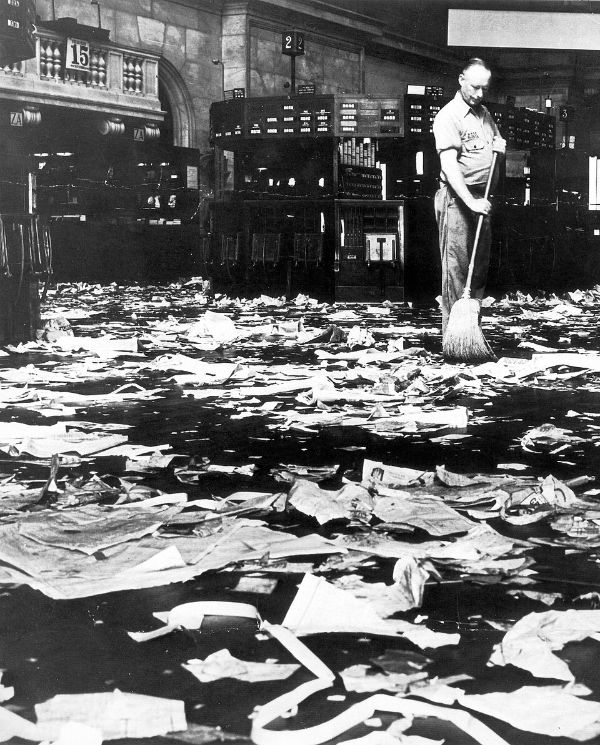
The Great Depression brought Adolf Hitler to power by causing mass unemployment, destroying public trust in democracy, and allowing the Nazi Party to present themselves as the only strong alternative. When the U.S. stock market crashed in 1929, American loans to Germany stopped immediately, crashing the fragile German economy.
By the end of 1930, that number had grown to 12 million. On July 31, 1932, the Nazis won 38 percent of the vote in the German national election. That was their high point. Second place was the Socialist Party. Third, the Communists.
The final result: 75 percent of the German people voted against democratic rule. The Nazis immediately consolidated power.
Hitler Was Like St. Ignatius
In January 1933, Hitler was named Chancellor after the death of President Hindenburg. Hitler abolished the title, declaring himself the Führer, German War Leader.
In 1934, a writer for the Baltimore Sun compared Hitler to the sixteenth-century Catholic Saint Ignatius. Archbishop Curley had something to say about that. He said to make such an inept comparison was to “insinuate that thousands of readers of The Sun are dullards.”
By July, the dictator designated the Nazis as the only legitimate political party in Germany. Membership became mandatory for civil servants, teachers, members of the media, and bureaucrats.
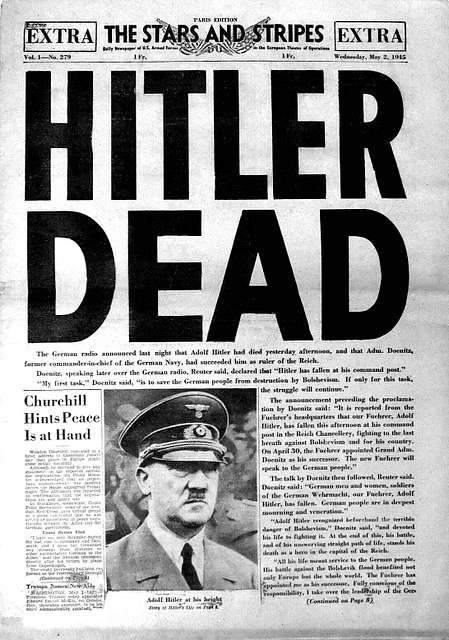
The Hitler Death Scene
Erna Flegel, a nurse who shared Adolf Hitler’s final days in a Berlin bunker, said the Nazi leader “sank into himself” and “aged greatly” before committing suicide as the Allied troops closed in.
Hitler “had a lot of gray hair and gave the impression of a man at least 15 to 20 years older,” toward the end of his life.
“In the last few days, Hitler sank into himself,” Flegel said. “He shook a great deal, walking was difficult for him, his right side was still very much weakened as a result of the attempt on his life (in July 1944).”
Flegel dismissed Braun, whom Hitler married shortly before his death, also died with Hitler. “She didn’t have any importance. Nobody expected much of her,” she said. “She wasn’t really his wife.”
The nurse described how Hitler said goodbye to his medical staff on April 29, 1945, the evening before his suicide.
“He came out of the side room, shook everyone’s hand, and said a few friendly words. And that was it. There were a few people who then heard it (the shot, when Hitler killed himself the next afternoon) and there were others who didn’t. The Führer suddenly wasn’t there anymore,” she recalled.
“I knew that the Führer was dead. Suddenly there were more doctors in the bunker. … I didn’t see Hitler’s body. It was taken up to the garden. The Führer had such an authority that when he was there you knew it. It felt so extraordinary,” she said.
Thus, Hitler’s fantasy of a 1000-year right ended with his suicide in 1945. Russian forces closed in.