

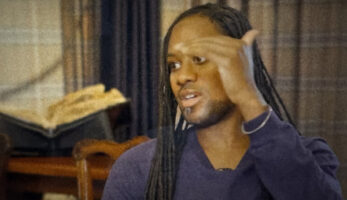
 Jason Arday, the school’s youngest Black professor, was found dead in London on Friday. There is no evidence of foul play. He was 41 years of age and resigned from his post at Cambridge University only days before. His resignation followed accusations of plagiarism that appear to be part of a vast and expansive web of lies.
It is very sad that this man died, and fingers are being pointed in several directions. Cambridge is under attack for hiring him despite warnings. The administrators are being lambasted for their exaggerated praise, which put him in the limelight. People who noted the plagiarism are being verbally assaulted.
In the end, if it was suicide, there is only one person to blame, and that is Jason Arday. If it was suicide. We don’t know. It is labeled an unexpected death. The police are investigating because it is suspicious. He was 41 and left behind a wife and two children.
However, it does show us the dangers of DEI in the university today. However, it is doubtful that anyone will learn the necessary lesson from it.
The Troubling Story of Jason Arday
Cambridge University hired Jason Arday for one of the most prestigious sociology positions in the world. They said he was a career scholar and underqualified by their own standards.
Cambridge’s requirements, reviewed by The New York Times, called for “an outstanding research record of international stature” and a “proven successful track record” supervising Ph.D. students.
In fact? Dr. Arday had a modest publication record and had bounced from one university to the next — not staying long enough to oversee a full three-year-or-more doctorate.
At 37, in 2023, the year he was hired, he was the university’s youngest Black professor at a time when the school was under pressure to diversify. He was suddenly famous based on a record of fantastical tales that Cambridge accepted without scrutiny or even common sense. It was at the peak of DEI pressure, and he was a Black autistic man with a PhD. and a thesis that might have been heavily plagiarized.
Dr. Arday faced allegations that he had plagiarized chunks of his papers, embellished parts of his recently published memoir, and fabricated aspects of his life story.
The resignation
In his Aug. 5 resignation letter, he wrote, “I no longer wish to feel as though I am living under a constant spotlight, where every aspect of my life is subject to public examination and judgment.” He added, “This is not the end of my work. It is simply the end of this chapter.”
His family said that, since starting at Cambridge, Dr. Arday had faced a campaign of scrutiny intended to undermine him. That became too much for him, they said.
However, the scrutiny appears warranted. And his spokesperson fell back on charges of racism when credible accusations surfaced.
His remarkable story was too remarkable. He told a tale of being diagnosed early with autism and having such significant developmental delays that he spent his entire childhood in a special-needs school. In his account, he did not speak until age 11 or read until 18, yet he managed to earn his doctorate and begin giving keynote speeches on the academic circuit. That wasn’t true since he spoke in his early years, and this could have been easily checked.
Also, he said he had run 30 marathons in 35 days for charity, a feat that would have placed him among the world’s elite athletes. They didn’t even check that. It was pure fantasy even on the surface.
Cambridge didn’t want to know the truth.
They wanted a smart black man they could groom. Administrators boasted of his work and ignored scholars who warned them about the plagiarism from day one. They knew for certain for at least a year. The professors at Cambridge knew.
The media is blaming conservatives in the UK for “seizing” on these issues. Truth often goes over badly. One journalist who allegedly had the goods was silenced after Dr. Ardlay reported him to the police.
When a scholar from another university questioned his work, Dr. Arday turned the tables and filed a complaint alleging racism with the other school, according to someone with direct knowledge of the complaint. That person, like some others who spoke to The Times, spoke on the condition of anonymity to avoid being dragged publicly into the controversy.
Dr. Arday never squarely addressed the questions of plagiarism and fabrication. The university knew the truth and attacked the people pointing to the truth. There was no evidence the university was ever going to recognize the plagiarism.
Heidi Mirza, an emeritus professor of education at University College London who once mentored Dr. Arday, said in an interview this past week that he had been ill-served by university administrators’ carelessness in their efforts to demonstrate their commitment to diversity.
“He’s a pawn,” she said, “whose ambition made him vulnerable.”
It sounds more like the university was the pawn of a failed ideology, and that Heidi is illogical. Sadly, people like this are all over our universities, especially the most prominent institutions of higher learning. They have to start failing, or they will never change.
Great video summarizing the issue: