

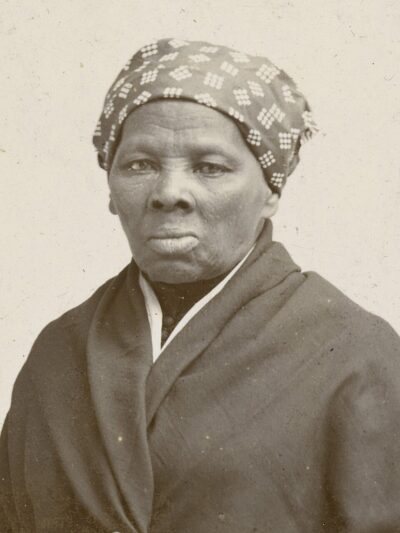
In 1860, 166 years ago, Harriet Tubman concluded her historic decade-long service as a conductor on the Underground Railroad.
Additionally, Harriet Tubman was posthumously awarded the honorary rank of one-star brigadier general in the Maryland Army National Guard on Veterans Day 2024, roughly 160 years after her vital military service during the Civil War.
Her decades-long service earned her the Sobriquet Moses.
Her Final Rescue Mission was in December 1860; Tubman executed her final journey into Maryland, guiding the Ennals family (including an infant) to safety. This included roughly 13 successful trips, during which she personally emancipated about 70 people and guided many more to safety.
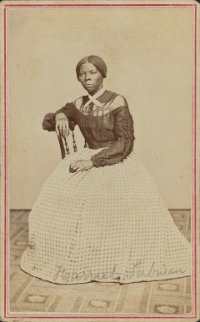
Carte-de-visite portrait of Harriet Tubman.jpg
Wikimedia Commons
This is the story of Harriet Tubman
Mrs. Tubman was one of nine children born to enslaved parents. At age 13, the teenager was severely beaten by an overseer with a 10-pound weight. She suffered from seizures, severe headaches, and narcolepsy for the rest of her life.
Around age 22, in 1844, Harriet Tubman married a free man, John Tubman. On September 17, 1849, they decided to escape the South. The family followed the North Star to Philadelphia, walking 100 miles.
After working for a year and saving money, Harriet Tubman returned to Maryland to free her sister and two nephews. A year later, she rescued her brother and two more children. In total, Miss Tubman made 13 trips into the South to free slaves, including her 70-year-old mother.
She never lost a single passenger during the dangerous journey.
By 1856, slave hunters put a $40,000 bounty on Miss Tubman’s head-the equivalent of $1 million today.
But Harriet remained defiant after the outbreak of the Civil War; she played a crucial role as a spy for the federal government. She often disguised herself as an old woman, wandering around Confederate territory in Virginia and the Carolinas. Harriet Tubman spoke with local slaves and smuggled top-secret military plans to the Union Army. After the war, Tubman lived the rest of her life in upstate New York. She died there in 1913 at the age of 91.
At five feet two inches tall, born a slave, dealing with a debilitating illness, and unable to read or write, she took charge and led men, women, and children.
By 1860, her stealth, courage, and perfect record—famously declaring she “never lost a passenger”—solidified her legendary status as the “Moses” of her people.