

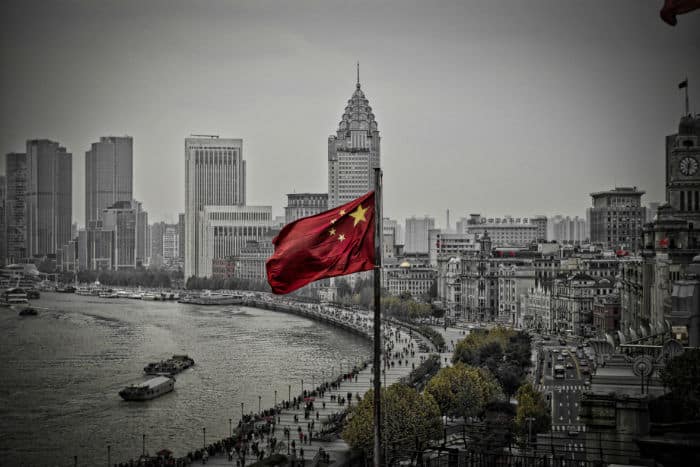
As China rolls out the red carpet for President Trump and his high-powered delegation in Beijing this week, the world’s two superpowers are locked in a high-stakes contest that spans trade, technology, military posture, and ideology. President Trump and Chairman Xi Jinping may exchange warm handshakes and speak of “great personal relations,” but both men understand the reality: there can be only one global leader. The contest is real, and the stakes could not be higher.
Democratic pundits and their media allies are already spinning a familiar narrative. They insist Trump arrived in Beijing weakened—far more vulnerable than he expected when his administration began laying the groundwork in early 2025 with aggressive tariffs and relentless pressure on China’s situational allies. Venezuela and Iran were the primary targets. The left claims Trump’s hand is shaky, his leverage gone, and his America First agenda in retreat.
Fortunately, that narrative collapses under scrutiny.
In fact, Trump’s position is stronger than the blue advocates admit. Venezuelan oil flows to China have not been severed – yet the Maduro regime that once propped up Beijing’s energy needs has been crippled by decisive American action. Iran’s role as a reliable fuel supplier for the Chinese economy has been severely undermined by the ongoing conflict. Yes, Supreme Court rulings on certain tariff authorities have created legal friction for the White House. But U.S. law still provides ample room for targeted taxes and restrictions when national security demands it. The battle on tariffs is far from lost.
What does worry serious observers, and what actually explains the Democratic spin, is the looming November 2026 midterms.
Those blue pundits love to paint Trump as an underdog in Beijing precisely because they sense the House of Representatives is in play. Recent polling and race-by-race analyses show the GOP in a genuinely vulnerable spot. Some of the dip in Republican support can be laid at the feet of the party itself: the costs of the Iran conflict and persistent inflation have tested public patience. Fair enough. Republicans must own their record.
But here is where the story takes a darker turn.
China has spent years cultivating influence inside the United States. The 2024 election cycle proved it beyond reasonable doubt. Remember Tim Walz? The Minnesota governor, who somehow remains in office despite his disastrous situation with massive Somalia-tied fraud in his home state. His documented financial and personal ties to Chinese Communist Party-linked entities became a major scandal. Walz had visited China roughly thirty times, helped steer federal funds toward research institutes with deep Wuhan connections, and maintained relationships that raised legitimate national-security flags. Those ties did not help the Harris-Walz ticket win the White House.
Another glaring example of policies that would objectively benefit the Chinese Communist Party is the Artificial Intelligence Data Center Moratorium Act, introduced on March 25 by Senator Bernie Sanders and Representative Alexandria Ocasio-Cortez. This legislation would impose an immediate nationwide halt on the construction of new AI data centers across the United States. Sold as an environmental and worker-protection measure, its real-world effect would be to cripple America’s technological momentum at the precise moment when artificial intelligence is emerging as the defining strategic technology of the century—the nuclear weapons of our time. If passed, this bill would hand the Chinese Communist Party a massive, unearned advantage in the global AI arms race, directly undermining American national security and ceding critical ground to our most dangerous adversary.
Beijing’s strategists are not stupid. They watch our election races closely. They see the same forecasts we do. And they are positioning themselves for a Democratic majority that could flip the chamber in November. Their calculation is simple: install enough sympathetic voices, or at least enough members willing to accept lobbyist cash and ideological alignment, on Capitol Hill, and they gain something far more valuable than a few tariff concessions.
They gain a consistent lever of control over American policy.
Imagine a Democratic House majority stocked with members who owe political favors to interests tied, directly or indirectly, to the Chinese Communist Party. Suddenly, Trump’s tough-on-China agenda faces endless investigations, funding blocks, and legislative sabotage. Beijing would not merely slow Trump down; it would gain a structural tool for managing the United States from within.
That is why Chinese officials are carrying themselves like winners during this week’s talks. They are not merely negotiating with the sitting president. They are betting on the next Congress.
Make no mistake: the threat is not abstract. It is the logical extension of what we have already witnessed-Walz-style relationships, influence operations targeting state and local officials, and the steady infiltration of CCP-linked money into American politics. The recent years have shown that parts of the Democratic apparatus remain dangerously susceptible to this influence.
Republicans must not hand them the opportunity. This November, voters will decide whether the House stays red or turns blue. A Democratic takeover might hand Beijing exactly the foothold it craves. It would transform a difficult negotiation in Beijing into a long-term strategic defeat for America.
~~~
Mike Robertson is a U.S. domestic and foreign policy analyst and commentator, with more than 30 years of law enforcement experience in some of the toughest neighborhoods. You may follow him on X at @Mike_for_MAGA and Reddit.
Bio from the American Spectator :
Mike Robertson is a retired police officer and civil servant. He is now a political analyst with a focus on U.S. domestic policy.
And here is a bit more detailed one:
Mike Robertson, a Midwest native born in ’76 in rural Indiana, kicked off his career chasing justice after snagging a criminal justice degree from Purdue University. He pounded the pavement as a cop in Indianapolis, Fort Wayne, and South Bend, tackling everything from street crime to community patrols, always gravitating back to those quieter rural beats he loved.