

The Effect of Consanguineous Marriages on Some Societies
According to the World Population Review, first-cousin marriages are common in Muslim-majority nations. There are studies showing that first cousin marriages have a significant negative impact on intelligence and health over generations.
Muslim-led countries believe in first-cousin marriages. It is a common practice.
Some Mennonites also marry first cousins.
Studies comparing health and intelligence to first-cousin marriages are dated or not considered definitive. However, in general, from the limited studies, inbreeding generally produces negative results in intelligence and health compared with distant unions.
IQ tests are unreliable. At best, they test linear skills and rely on the person’s education, health, and culture. Nourishment during childbirth affects the newborn.
That being said, the BMJ reported that a study of consanguinity and intelligence reveals a significant correlation between the two. Consanguineous marriages, particularly between first cousins, are common in certain cultures and can lead to high rates of consanguinity. This increased consanguinity is associated with lower IQ scores, as seen in the Ansari Muslims of Bhagalpur, where inbred children showed lower verbal and performance subtest scores and lower full-scale IQs. The study also found that both consanguinity and locality affected IQ, with the interaction between these two factors being significant.
In Pakistan, 30% of first-cousin marriages result in children with disabilities.
According to Innovations in Clinical Neuroscience, the implications of consanguinity on cognitive behavior highlight the importance of understanding the genetic and social factors that influence intelligence and the potential need for public health programs to address these issues.
Consanguinity is not a good idea, and we should be aware of it and how it affects society.
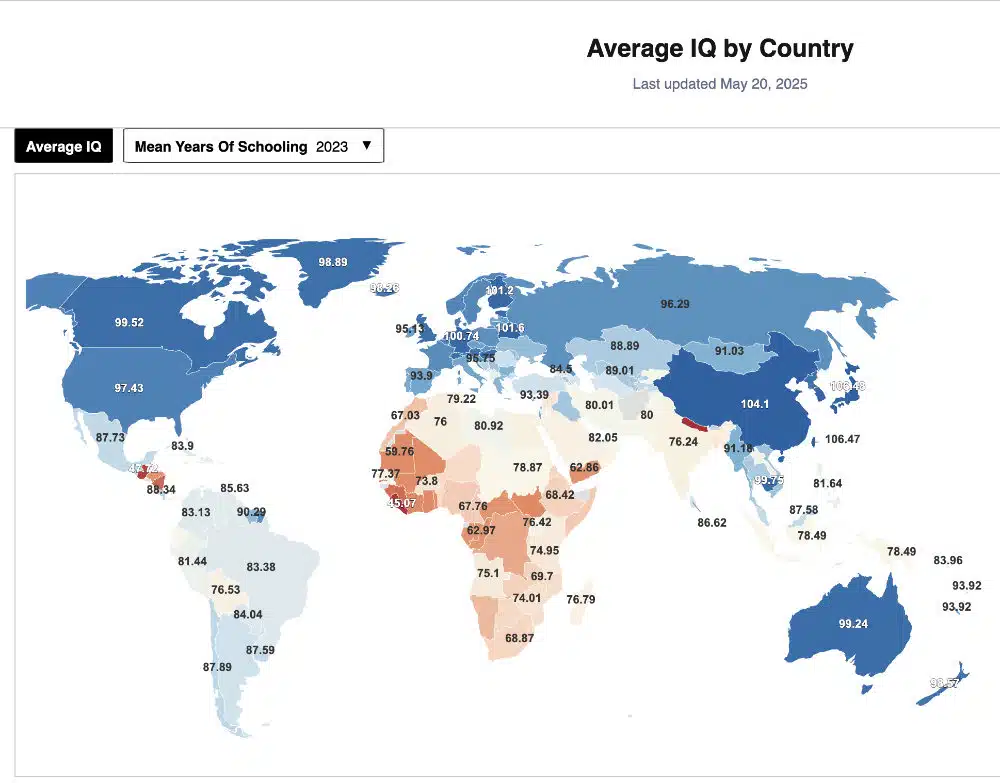
Average IQs by Country Vary Greatly
Keep in mind, IQs are generally governed by education, not potential. These are samples from various sources. The US and Europe are getting a little dumber. Poor education and probably poor nutrition are killing IQs in much of the world.
We can’t say if there is a correlation with consanguinous marriages with so many variables, but it doesn’t help.
Average IQs in the world by country data here.
Average IQs in Arab countries here.
World population IQ by World population review here.
Well that fills in part of the equation…the Koran takes care of the rest…
This is exactly why Democrats bring them here, as these foreign invaders are likely the only ones stupid enough to vote for idiots like Bidumb, Commiela and Tampon Tim.
The map shows that the two highest average IQs are China (104) and Japan (106), both nations have zero or close to zero immigrants of certain colors.
Costly to nations who allow these savages in.
Ilhan and her brother?
Comments are closed.